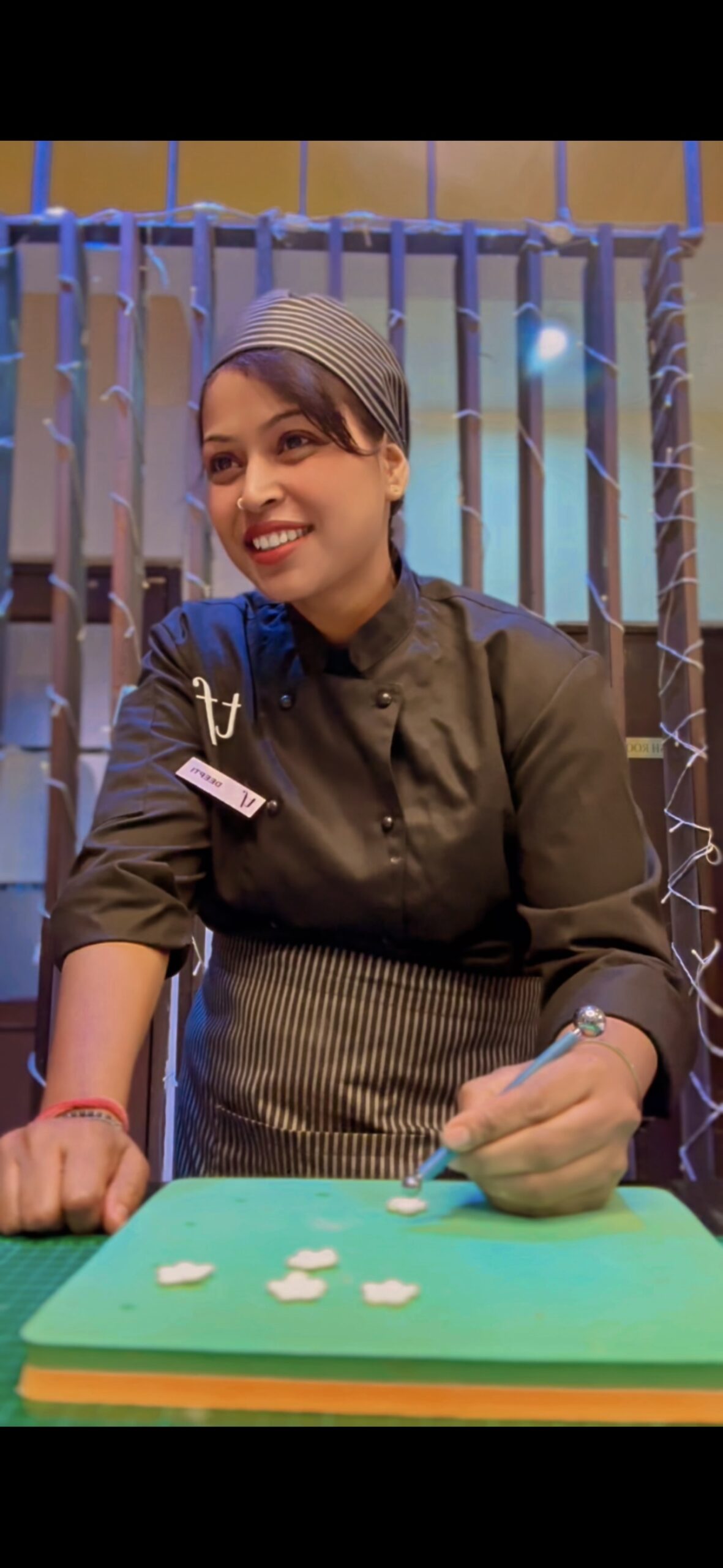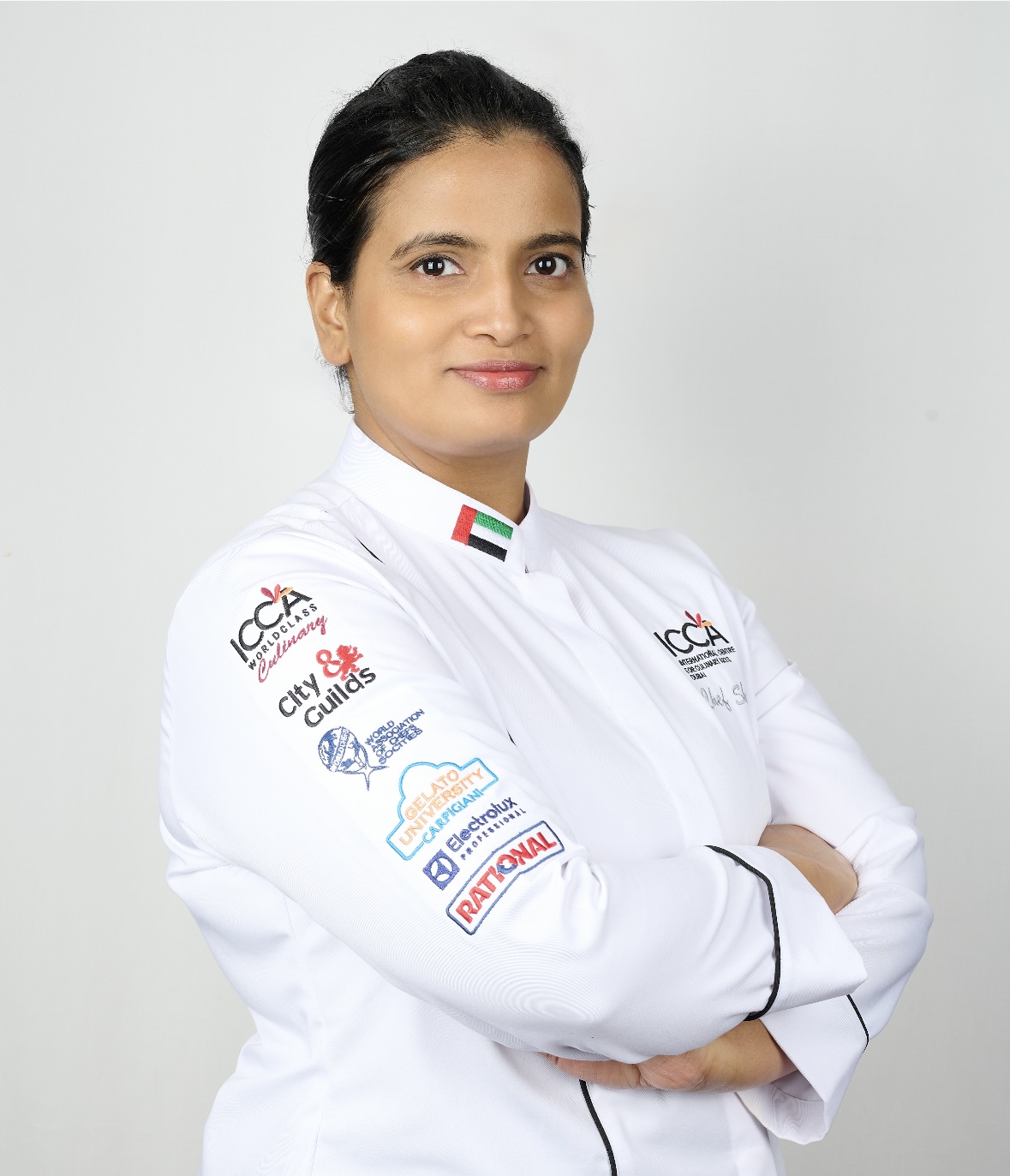

With over 11 years of international experience across France, India, and Dubai, Chef Instructor Chef Shefali Saxena brings a remarkable blend of technical mastery, cultural depth, and professional discipline to both the kitchen and the classroom. Now based in Dubai and teaching in prestigious ICCA – International Centre for Culinary Arts Dubai, she is dedicated to shaping the next generation of culinary professionals through hands-on training, refined techniques, and a strong emphasis on creativity and excellence. Her background in both hotel and restaurant operations further enriches her teaching, inspiring students to embrace global flavors, precision, and a genuine passion for the craft.
Chef, talk to us about your journey — when did it all start?

My journey with food really began when I was about five years old. I used to spend hours with my grandmother in the kitchen, learning about ingredients, traditional Indian tools, and listening to her stories. Those moments shaped me without me even realising it.
Some of my strongest childhood memories are from farmers’ market trips with my father. You’d see this explosion of colours—fresh greens, bright vegetables and the smell of freshly cut spinach, herbs, and mangoes would hit you long before you reached the stall. I think that’s where I first understood the power and personality of ingredients.

As I grew older, my curiosity for ingredients turned into a clear career path. I always knew I wanted to cook, but it took time to realise it could be a profession. Working across different countries taught me that food is a form of storytelling. It connects people in ways nothing else truly does.
I started my career with the Taj Group of Hotels, first as a management trainee and then as a junior sous chef at the iconic Taj Mahal Palace in Mumbai. After that, I moved to Dubai for a unique role, where I handled events for Arabic women’s functions in banquets and led the exclusive club lounge. Later, I returned to India and became Executive Chef at Taj Wellington in Chennai—at the time, I was the youngest executive chef in the group. From there, I moved to Normandy, France, where I ran a restaurant for two years before returning to Dubai. For the past 1.5 years, I’ve been a chef trainer at ICCA Dubai.
How do global spice routes shape the evolution of modern fusion cuisine, and what does this reveal about cultural exchange through food?
Historically, the spice routes were the first global highways of food culture. Long before “fusion cuisine” existed, ingredients were already travelling pepper from Kerala, saffron from Persia, chilies moving from the Americas to Asia.

Fusion cuisine today is just a continuation of that movement. When a dish brings together Middle Eastern warmth, Southeast Asian heat, or Latin American smokiness, it’s not just about mixing flavours. It’s an acknowledgment of centuries of people crossing paths and influencing each other.
Food has always been a universal connector. Even when cultures had nothing else in common, spices allowed them to exchange ideas, memories, and traditions.
In what ways do spices reflect the environmental, historical, and spiritual identities of their regions?
Spices are basically maps you can taste the landscape and the culture behind them.
Sumac carries the brightness and sun of the Levant.
Za’atar reflects a place where food, herbs, and healing have always intertwined.

Harissa holds the North African story of heat, resilience, and boldness.
Shichimi togarashi captures Japan’s balance of land and sea.
Garam masala represents India’s spiritual and Ayurvedic roots the idea that food influences both the body and the mind. The warming spices symbolise balance, grounding, and comfort.
Baharat is shaped by centuries of Ottoman, Persian, and Arab exchange history in a single blend. Each mix shows what people grew, valued, traded, and believed in.
How can a chef creatively integrate spices from different continents while ensuring harmony and authenticity?
For me, it starts with respect for the ingredient and the culture behind it. Every ingredient has a journey and the effort of many hands. It’s not always about exotic produce; often it’s about doing something beautiful with what’s available.
Before using a spice, I try to understand its personality:
Is it warm? Sharp? Floral? Smoky?
I look at how that spice behaves in its own cuisine. When you understand its natural role, you can pair it with flavours from other cultures without it feeling forced.

Sometimes that means using baharat with a Latin American cooking method or bringing shichimi into a Mediterranean-style dish. Creativity comes from curiosity; authenticity comes from understanding.
How do global spice blends influence the psychology of taste, and why do certain aromas evoke comfort universally?
Smell is deeply emotional it connects directly to memory.

For me, the smell of fresh herbs instantly takes me back to farmers’ market trips with my father. Many people have similar emotional bonds with spices:
Cinnamon feels warm and homely.
Cardamom feels festive.

Saffron reminds us of celebrations. Even though we come from different cultures, these aromas often trigger the same feelings. Spice blends hold the memories of entire regions, so tasting them can instantly create a sense of comfort and connection.
What role do spices play in global health traditions, and how can modern gastronomy balance healing wisdom with science?
Spices were part of medicine long before they were part of recipes. Rasel hanout is full of warming, digestive spices.
Japanese sanshō is valued for its refreshing, cleansing qualities.

Turmeric, ginger, cinnamon, fenugreek they appear in healing traditions across the world.
Modern cooking lets us honour these roots while understanding the science anti-inflammatory benefits, antioxidants, digestive support, and more.
Personally, I focus on creating food that feels good and is good. That also includes practising zero-waste cooking. Using ingredients fully ,turning cauliflower leaves into green dust or carrot tops into pesto is something I follow and teach.
How does your global experience influence the way you mentor young chefs at ICCA?
Experience has taught me that technique gives you discipline, but creativity gives you identity.
When I mentor students, I focus on three things:
Strong fundamentals — knife skills, seasoning, timing, heat control. Creativity needs a foundation.
Understanding culture — before using a spice or a method, know where it comes from. And respect ingredients by practising zero-waste cooking.

Creative confidence — I want students to trust their palate, question, experiment, and find their own voice. Inspiration helps, but originality is what builds identity.
My goal is to make the kitchen a space of discovery. I guide them, but I don’t dictate. When they understand flavour and respect ingredients, their own style naturally emerges